
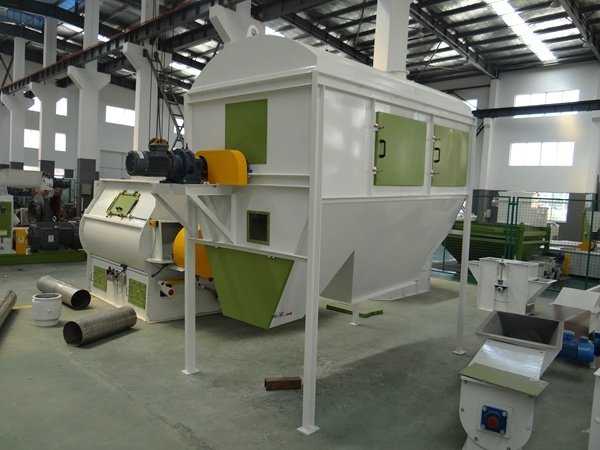
Description
Technical Specifications & Operating Principles
Separation Technology & Efficiency
-
Cyclonic Action: Tangential inlet designs creating 800-2,500 RPM vortex for coarse particle separation
-
Inertial Separation: Baffle plate systems utilizing sudden directional changes
-
Gravitational Settlement: Low-velocity chambers for heavy particle dropout
-
Multi-Stage Designs: Combined approaches achieving 85-98% efficiency on >10 micron particles
Performance Metrics & Physical Specifications
-
Airflow Capacity: 500-50,000 CFM with pressure drop of 0.5-2.5 inches WC
-
Particle Cut-point: 10-50 micron depending on design and application
-
Construction Materials: 12-14 gauge carbon steel, 304 stainless, or abrasion-resistant coatings
-
Temperature Tolerance: -40°F to 450°F (-40°C to 232°C) with appropriate material selection
Installation & Integration Features
-
Inlet/Outlet Configurations: Flanged, slip-fit, or screw-type connections
-
Mounting Options: Structural support legs, wall brackets, or direct equipment mounting
-
Discharge Mechanisms: Manual dump gates, rotary valves, or screw conveyors
-
Access & Maintenance: Inspection ports, cleanout doors, and quick-disconnect sections
Application-Specific Performance Data
| Industry Application | Efficiency Rating | Primary Particle Range | Pressure Drop | Maintenance Interval |
|---|---|---|---|---|
| Grain Handling & Processing | 92-97% | 20-500 microns | 0.8-1.5″ WC | 3-6 months |
| Mining & Mineral Processing | 85-95% | 15-200 microns | 1.2-2.5″ WC | 1-3 months |
| Woodworking & Biomass | 88-96% | 10-300 microns | 0.6-1.8″ WC | 2-4 months |
| Chemical & Powder Processing | 90-98% | 5-100 microns | 0.5-1.2″ WC | 6-12 months |
| HVAC & Building Protection | 80-90% | 15-150 microns | 0.4-0.9″ WC | 12-24 months |
Operational Benefits by Application:
-
Agricultural Facilities: Prevent grain dust accumulation reducing explosion risks
-
Mining Operations: Extend primary filter life 300-500% in high-dust environments
-
Manufacturing Plants: Reduce facility housekeeping costs by 40-70%
-
Power Generation: Protect critical heat exchangers from fouling and erosion
Industry Implementation & Economic Impact
Grain Elevators & Processing Facilities
In agricultural environments, pre-cleaners capture the bulk of grain dust and foreign materials before air reaches more expensive baghouse filters. A typical grain elevator handling 10,000 bushels per hour reported extending their primary filter replacement cycle from 6 to 24 months after installing cyclonic pre-cleaners, representing an annual savings of $18,000 in filter costs alone.
Mining & Mineral Extraction
For mining operations dealing with highly abrasive rock dust, pre-cleaners remove the most damaging particles before they reach final filtration stages. One copper concentrator plant reduced their primary filter consumption by 68% while decreasing fan maintenance frequency due to reduced blade erosion from coarse particulate.
Wood Products & Biomass Energy
In wood processing facilities, pre-cleaners capture bark, wood chips, and coarse dust that would quickly blind finer filters. A medium-sized pellet mill increased their system uptime by 22% by eliminating frequent filter changes, while reducing their compressed air consumption for pulse cleaning by 35%.
Industrial HVAC & Facility Protection
Large-scale pre-cleaners installed on building air intakes protect internal environments and equipment from atmospheric dust. A manufacturing facility in a dusty region reported 45% reduction in internal housekeeping costs and 60% extension of HVAC filter life after implementing inertial separator pre-cleaners.
Economic Justification & ROI Analysis
Total Cost of Ownership Considerations
-
Equipment Investment: $1,500-$25,000 based on capacity and construction
-
Installation Costs: $500-$5,000 for structural and ductwork modifications
-
Operational Savings: $2,000-$15,000 annually in reduced filter replacements
-
Energy Savings: 10-25% reduction in system pressure drop and fan power consumption
Return on Investment Calculation
-
Payback Period: Typically 6-18 months for most industrial applications
-
Filter Cost Reduction: 50-80% decrease in primary filter consumption
-
Maintenance Labor: 30-60% reduction in filter change-out time
-
System Reliability: Reduced downtime from filter-related issues
Performance Validation Methods
-
Differential Pressure Monitoring: Track pre-cleaner and system pressure drop
-
Filter Inspection: Document particulate loading patterns on primary filters
-
Energy Consumption: Monitor fan motor amperage before and after installation
-
Emissions Testing: Verify system efficiency meets design specifications
Expert Q&A for System Designers
Q1: When is a pre-cleaner economically justified in a filtration system?
A: Pre-cleaners provide maximum value when dust concentrations exceed 50 mg/m³, particle size distribution shows significant content above 10 microns, or primary filter replacement costs exceed $2,000 annually. They’re also essential when handling abrasive materials that cause premature wear on downstream equipment.
Q2: How do we select between cyclonic and inertial separation technologies?
A: Cyclonic pre-cleaners excel with higher dust loads (>100 mg/m³) and larger particles (>20 microns), while inertial separators perform better with moderate dust loads and broader particle size distributions. For extreme conditions, multi-stage systems combining both technologies provide the most comprehensive protection.
Q3: What maintenance is required for optimal pre-cleaner performance?
A: Regular inspection of wear surfaces (quarterly), verification of discharge mechanism operation (monthly), and checking for air leaks (semi-annually). The most critical maintenance is ensuring the dust discharge system remains unobstructed to prevent re-entrainment of collected material.
Q4: How does pre-cleaner efficiency affect downstream filter selection?
A: With effective pre-cleaning (85%+ efficiency), you can often specify less robust primary filters with higher air-to-cloth ratios, reducing both initial cost and ongoing pressure drop. This can also allow selection of specialized media optimized for fine particulate rather than needing compromise media that handles both coarse and fine particles.
Q5: Can pre-cleaners be retrofitted to existing systems?
A: Yes, most pre-cleaners can be integrated into existing ductwork with proper engineering. Key considerations include maintaining adequate straight duct runs before and after the pre-cleaner (typically 3-5 duct diameters), ensuring structural support for added weight, and verifying system fan capacity can handle additional pressure drop.



Reviews
There are no reviews yet.