
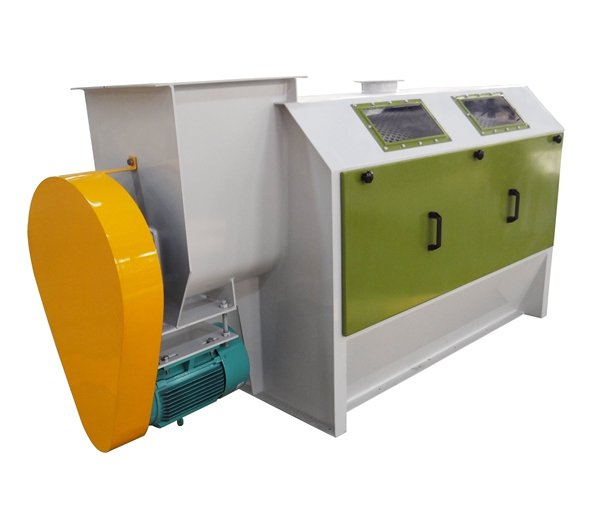
Description
Technical Specifications & Engineering Design
Separation Technology & Flow Dynamics
-
High-Efficiency Cyclonic Action: Multi-tube arrays creating precise vortices at 2,500-5,000 RPM
-
Laminar Flow Optimization: Reduced turbulence for improved fine particle capture
-
Boundary Layer Control: Minimized re-entrainment through surface treatments
-
Multi-Stage Separation: Primary, secondary, and tertiary separation chambers
Performance Specifications & Physical Parameters
-
Airflow Capacity: 300-20,000 CFM with pressure drop of 0.8-3.0 inches WC
-
Cut-point Efficiency: d50 = 3-15 microns depending on powder characteristics
-
Construction Standards: 304/316L stainless steel, electropolished finishes, USDA-accepted materials
-
Temperature Range: -60°F to 750°F (-51°C to 399°C) with specialized alloys
Powder-Specific Design Features
-
Anti-static Construction: Prevents powder adhesion to internal surfaces
-
Hygienic Design: Radiused corners, drainable profiles, CIP compatibility
-
Explosion Protection: NFPA-compliant venting, isolation valves, and suppression ports
-
Material Recovery: High-efficiency discharge systems preserving product integrity
Application-Specific Performance Data
| Powder Type | Particle Size Range | Collection Efficiency | Recommended Configuration | Industry Applications |
|---|---|---|---|---|
| Pharmaceutical Actives | 1-50 microns | 90-97% @ 5 microns | Multi-tube array, sanitary finish | API manufacturing, tablet pressing |
| Food Powders | 10-100 microns | 92-98% @ 15 microns | USDA-accepted, CIP capability | Milk powder, flour, spices |
| Chemical Catalysts | 2-20 microns | 85-95% @ 3 microns | Explosion-proof, conductive | Chemical synthesis, catalyst recovery |
| Additive Manufacturing | 5-45 microns | 88-96% @ 10 microns | Anti-static, high-efficiency | Metal/plastic powder recovery |
| Ceramic & Mineral | 0.5-30 microns | 80-92% @ 2 microns | Abrasion-resistant lining | Fine ceramics, mineral processing |
Operational Advantages by Application:
-
Pharmaceutical: Preserves active ingredient potency through gentle handling
-
Food Processing: Maintains flavor profiles and prevents thermal degradation
-
Chemical Manufacturing: Enables catalyst recovery and reuse cycles
-
Additive Manufacturing: Allows premium powder material recycling
-
Ceramic Production: Reduces material loss in high-value powder applications
Industry Implementation & Economic Value
Pharmaceutical Manufacturing & API Processing
In pharmaceutical environments, powder pre-cleaners capture valuable active ingredients while protecting HEPA filtration systems. A major pharmaceutical company processing antibiotic powders reported 94% recovery of product worth approximately $285,000 annually, while extending their final filter life from 6 to 24 months.
Food & Dairy Powder Production
For milk powder, protein concentrates, and other food powders, specialized pre-cleaners maintain product quality while reducing filtration costs. A dairy processing 15 tons/hour of milk powder reduced their primary filter replacement costs by 72% and decreased energy consumption by 18% through optimized system pressure drop.
Chemical Catalyst & Specialty Chemical Production
In catalyst manufacturing, powder pre-cleaners recover valuable materials while preventing contamination of final filtration stages. A catalyst producer handling platinum-group metals achieved 91% recovery of ultra-fine catalyst powders worth over $500,000 annually, with system payback achieved in just 8 months.
Additive Manufacturing & Metal Powder Handling
For 3D printing operations using expensive metal powders, pre-cleaners enable material recycling while protecting sensitive printer components. An aerospace additive manufacturing facility reported 89% recovery of titanium alloy powder worth approximately $180 per kilogram, while eliminating printer nozzle clogging issues.
Economic Justification & Operational ROI
Total Cost of Ownership Analysis
-
Equipment Investment: $8,000-$75,000 based on capacity and material specifications
-
Installation & Integration: $2,000-$15,000 for process connection and controls
-
Operational Savings: $5,000-$150,000 annually in recovered product value
-
Filter Cost Reduction: 60-85% decrease in final filter consumption
Return on Investment Metrics
-
Payback Period: 3-12 months for most powder recovery applications
-
Product Recovery Value: Primary ROI driver in high-value powder applications
-
Maintenance Reduction: 40-70% decrease in filter change labor
-
System Uptime: Increased production availability through reduced filter changes
Performance Validation & Monitoring
-
Particle Size Analysis: Regular efficiency verification across size fractions
-
Product Quality Testing: Ensure recovered powder meets specifications
-
Pressure Drop Trending: Monitor system performance degradation
-
Material Balance Tracking: Quantify recovery rates and economic value
Expert Q&A for Powder System Designers
Q1: What distinguishes powder pre-cleaners from standard dust pre-cleaners?
A: Powder pre-cleaners feature optimized geometries for fine particle dynamics, specialized surface finishes to prevent adhesion, higher rotational velocities for fine particle separation, and often multi-stage designs to handle the specific characteristics of powders. Standard pre-cleaners typically target larger particles and higher dust loads with less concern for product recovery.
Q2: How do we prevent powder compaction and bridging in discharge systems?
A: Implement mechanical dischargers (rotary valves, screw conveyors), use fluidizing pads or air cannons for stubborn materials, maintain optimal hopper angles (≥60°), and consider surface treatments like PTFE coatings. For highly cohesive powders, vibrators or acoustic cleaners may be necessary.
Q3: What is the relationship between powder characteristics and pre-cleaner efficiency?
A: Key factors include particle density (higher density improves efficiency), size distribution (broader distributions may require multi-stage approaches), cohesiveness (affects discharge design), and hygroscopicity (may require temperature control or dehumidification). Laboratory testing with actual powder samples is recommended for critical applications.
Q4: Can powder pre-cleaners be designed for explosive powder applications?
A: Yes, with appropriate explosion protection including pressure-rated construction, explosion vents or suppression systems, conductive materials to prevent static accumulation, and isolation valves to prevent flame propagation. NFPA 68, 69, and 652 compliance is essential for combustible powder applications.
Q5: How do we validate pre-cleaner performance for regulatory submissions?
A: Implement performance qualification (PQ) protocols including particle size distribution analysis upstream and downstream, collection efficiency calculations across the size spectrum, material balance verification, and continuous monitoring of critical parameters. Documentation should meet FDA, EMA, or other regulatory requirements as applicable.



Reviews
There are no reviews yet.