
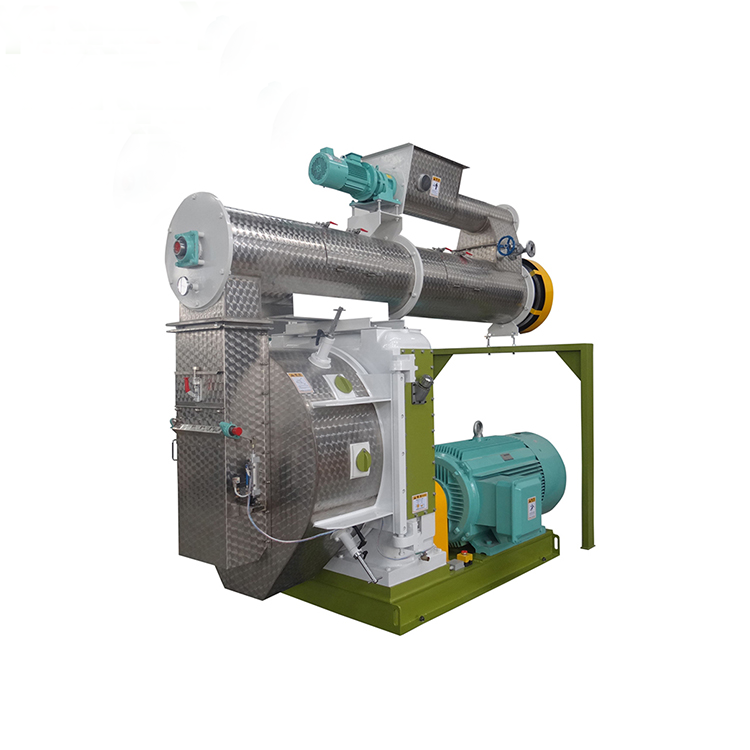
Description
Technical Specifications & Mechanical Design
Drive System & Power Configuration
-
Main Motor: 90-560 kW (120-750 HP), depending on capacity
-
Gearbox: Hardened spiral bevel gears with torque capacities from 35,000-220,000 Nm
-
Feeder System: 2.2-11 kW variable frequency drive with precision metering
-
Conditioner Motor: 15-75 kW with stepless speed control
Pelleting Chamber Components
-
Die Diameter: 450-1,350 mm (carbon/chrome/molybdenum steel alloys)
-
Die Thickness: 35-100 mm (L/D ratios optimized for specific ingredients)
-
Roller Configuration: 2-3 rollers, centrifugal cast with tungsten carbide overlay
-
Active Die Area: 0.15-0.55 m² determining maximum throughput
Conditioning Technology
-
Single/Dual Shaft Pre-conditioners: 30-180 second retention time
-
Steam Injection: 4-10% addition at 3-8 bar saturated steam
-
Liquid Systems: 1-8% molasses, fats, or enzyme addition capability
-
Thermal Control: Maintains 75-95°C mash temperature pre-pelleting
Species-Specific Production Parameters
| Animal Category | Typical Pellet Size | Optimal Moisture | Production Capacity | Special Requirements |
|---|---|---|---|---|
| Broilers | 3.0-4.5 mm | 15-17% | 8-25 t/h | High energy, 22% protein |
| Layers | 4.0-4.8 mm | 14-16% | 6-20 t/h | Calcium-phosphorus balance |
| Pigs (Starter) | 2.0-3.0 mm | 16-18% | 5-15 t/h | Highly digestible ingredients |
| Pigs (Grower/Finisher) | 3.5-5.0 mm | 15-17% | 8-22 t/h | High fiber tolerance |
| Dairy Cattle | 6.0-8.0 mm | 12-14% | 5-18 t/h | Maximum fiber preservation |
| Beef Cattle | 6.0-10.0 mm | 12-14% | 6-20 t/h | High roughage incorporation |
Quality Performance Standards:
-
Pellet Durability Index (PDI): 90-97%
-
Fines Generation: <5% at production
-
Moisture Uniformity: ±0.5%
-
Starch Gelatinization: 25-40% (optimized for digestibility)
Advanced Features & Technological Integration
Intelligent Process Control
-
PLC Systems: Recipe management for 200+ formulations
-
Real-time Monitoring: Amperage, temperature, production rate tracking
-
Automated Optimization: Die-roller gap adjustment, steam modulation
-
Data Analytics: Production efficiency tracking, predictive maintenance
Conditioning Innovations
-
Double-Shaft Conditioners: Counter-rotating paddles for uniform mixing
-
Steam Quality Management: Moisture/temperature proportional control
-
Liquid Application: Precision spraying with viscosity compensation
-
Retention Control: Adjustable weirs and paddle angles
Die Technology Advancements
-
Spiral Hole Distribution: Ensures even wear and power distribution
-
Step-Drilling Patterns: Optimized for specific ingredient characteristics
-
Metallurgy Options: Chrome-alloy, stainless steel, or bi-metal construction
-
Quick-Change Systems: Hydraulic or mechanical die replacement
Operational Performance & Economic Impact
Efficiency Metrics
-
Specific Energy Consumption: 12-25 kWh/ton
-
Steam Utilization: 45-85 kg/ton
-
Production Efficiency: 85-95% of theoretical maximum
-
Overall Equipment Effectiveness (OEE): 80-90%
Economic Advantages
-
Improved FCR: 5-15% enhancement over mash feeds
-
Production Costs: $8-20/ton pelleting cost
-
Quality Premium: 10-25% value addition over mash
-
Return on Investment: 12-24 months
Case Study – Integrated Poultry Producer:
After installing a modern pellet mill, the operation documented:
-
Production increase: 32% (15 to 19.8 t/h)
-
Pellet quality improvement: PDI from 88% to 94%
-
Energy efficiency: 18% reduction in kWh/ton
-
Feed conversion improvement: 1.85 to 1.72 in broilers
Maintenance & Reliability Engineering
Preventive Maintenance Schedule
-
Daily: Visual inspection, lubrication, vibration checks
-
Weekly: Die/roller wear measurement, belt tension verification
-
Monthly: Gearbox oil analysis, bearing condition monitoring
-
Annually: Complete overhaul and alignment check
Component Life Expectancy
-
Die Life: 3,000-10,000 hours (formulation dependent)
-
Roller Life: 2,500-6,000 hours
-
Feeder Components: 5,000-12,000 hours
-
Conditioner Parts: 6,000-15,000 hours
Sustainability & Operational Excellence
Resource Efficiency
-
Water Usage: 0.2-0.5 m³/ton of pellets
-
Energy Recovery: Heat exchange systems capturing 20-35% waste heat
-
Dust Control: 99%+ collection efficiency
Environmental Benefits
-
Reduced Waste: 10-30% less feed wastage
-
Improved Nutrient Utilization: 5-15% better digestibility
-
Manure Management: Reduced nutrient excretion
Future Development & Industry Trends
Technology Evolution
-
AI Integration: Machine learning for process optimization
-
Predictive Maintenance: IoT sensors for component life forecasting
-
Advanced Control Systems: Real-time quality adjustment
-
Digital Integration: ERP and supply chain connectivity
Market Directions
-
Specialized Feeds: Nutrient-specific formulations
-
Sustainability Focus: Carbon footprint reduction
-
Traceability: Full supply chain transparency
-
Automation: Reduced labor dependency
Reviews
There are no reviews yet.