
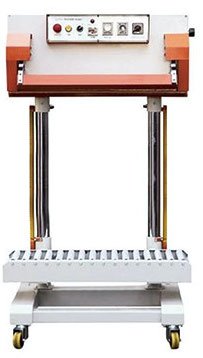
Description
Technical Specifications & Performance Data
Heating System & Temperature Control
-
Heating Elements: Ceramic, aluminum, or mica band heaters (500-3000W)
-
Temperature Range: 50°C to 450°C (±1°C stability)
-
Heating Zones: Single to multi-zone control with individual profiling
-
Response Time: 2-5 minutes to reach set temperature from cold start
Sealing Mechanism & Pressure System
-
Seal Pressure: 10-200 PSI (pneumatic or spring-loaded)
-
Dwell Time: 0.1-10.0 seconds (programmable with 0.01s resolution)
-
Seal Bar Materials: Teflon-coated aluminum, chrome-plated brass, hardened steel
-
Cooling Systems: Air knife, water-cooled, or passive heat sink configurations
Machine Construction & Capabilities
-
Frame Materials: Powder-coated steel, stainless steel (304/316), aluminum alloy
-
Seal Length: 100mm to 2000mm (standard sizes with custom options)
-
Production Speed: 10-100 cycles per minute (dependent on seal length and material)
-
Power Requirements: 110V/220V single phase or 380V three-phase options
Application-Specific Configurations
| Industry Application | Typical Temperature Range | Seal Pressure | Special Features | Common Materials |
|---|---|---|---|---|
| Medical Device Packaging | 160-200°C | 40-80 PSI | Tyvek sealing capability, validation packages | Tyvek, PETG, foil laminates |
| Food Packaging | 120-180°C | 30-60 PSI | USDA acceptance, CIP systems | Polyethylene, polypropylene, laminates |
| Electronics Protection | 140-220°C | 50-100 PSI | ESD-safe materials, moisture barrier focus | Aluminum foil laminates, barrier films |
| Pharmaceutical Blisters | 150-210°C | 60-120 PSI | GMP compliance, cleanroom compatibility | PVC/PVDC, cold-form foil |
Performance Specifications:
-
Seal Strength: 2-8 N/15mm (material dependent)
-
Temperature Uniformity: ±2°C across seal bar length
-
Energy Consumption: 1.5-12 kWh depending on size and usage
-
Uptime Performance: 95%+ with preventive maintenance programs
Advanced Control & Monitoring Systems
Precision Control Features
-
Temperature Control: PID with auto-tuning and multi-zone capability
-
Pressure Regulation: Digital pressure control with real-time monitoring
-
Timer Systems: Digital timing with millisecond accuracy
-
Safety Systems: Over-temperature protection, emergency stop circuits
Automation & Integration
-
PLC Control: Recipe storage for 50+ product configurations
-
HMI Interface: Touchscreen operation with intuitive programming
-
Data Logging: Production counts, temperature profiles, error tracking
-
Connectivity: Ethernet, RS-232, USB for factory integration
Quality Assurance Systems
-
Seal Integrity Monitoring: Real-time pressure and temperature verification
-
Vision Systems: Optional integrated seal inspection
-
Statistical Process Control: Real-time quality trend analysis
-
Documentation: Complete batch records and validation data
Operational Economics & Maintenance
Cost Analysis
-
Equipment Investment: $2,000-$25,000 (based on automation level and features)
-
Installation Costs: $500-$3,000 (site preparation and commissioning)
-
Operating Costs: $0.80-$2.50 per operating hour (energy and maintenance)
-
Tooling Costs: $200-$1,500 for replacement seal bars and components
Maintenance Protocol
-
Daily: Visual inspection, cleaning, safety check
-
Weekly: Heater resistance check, surface condition inspection
-
Monthly: Pressure system calibration, component lubrication
-
Quarterly: Full system calibration and performance validation
Component Life Expectancy
-
Heating Elements: 3,000-5,000 operating hours
-
Seal Bars: 12-24 months (dependent on material and usage)
-
Control System: 7-10 years service life
-
Structural Components: 10-15 years with proper maintenance
Industry-Specific Applications
Medical Device Packaging
Hot sealing machines provide the consistent, validated performance required for sterile barrier systems. One major medical device manufacturer documented 99.98% seal integrity after implementing a multi-zone hot seal system with real-time monitoring, while reducing packaging validation time by 65%.
Food & Consumer Goods
In food packaging applications, hot sealers create hermetic seals that extend product shelf life while maintaining packaging integrity. A snack food company achieved a 40% reduction in packaging material waste through precise temperature control and automated monitoring systems.
Electronics & Moisture-Sensitive Products
For moisture-sensitive applications, hot sealing machines create barrier seals that protect products from environmental factors. An electronics manufacturer reduced moisture-related failures by 85% after implementing a hot sealing system with integrated moisture detection.
Pharmaceutical Packaging
In pharmaceutical blister packaging, hot seal technology provides the consistent performance needed for regulatory compliance while maintaining product protection. A pharmaceutical company improved production yield by 12% while reducing seal-related rejects to less than 0.1%.
Future Development & Technology Trends
Innovation Directions
-
IoT Integration: Remote monitoring and predictive maintenance
-
Energy Efficiency: Advanced insulation and heat recovery systems
-
Smart Materials: Self-regulating heating elements and adaptive surfaces
-
Sustainability: Reduced energy consumption and material usage
Market Evolution
-
Increased Automation: Integration with robotic loading and unloading
-
Digital Transformation: Cloud-based monitoring and data analytics
-
Customization: Application-specific configurations and quick changeover
-
Global Standards: Compliance with international safety and quality requirements

Reviews
There are no reviews yet.