
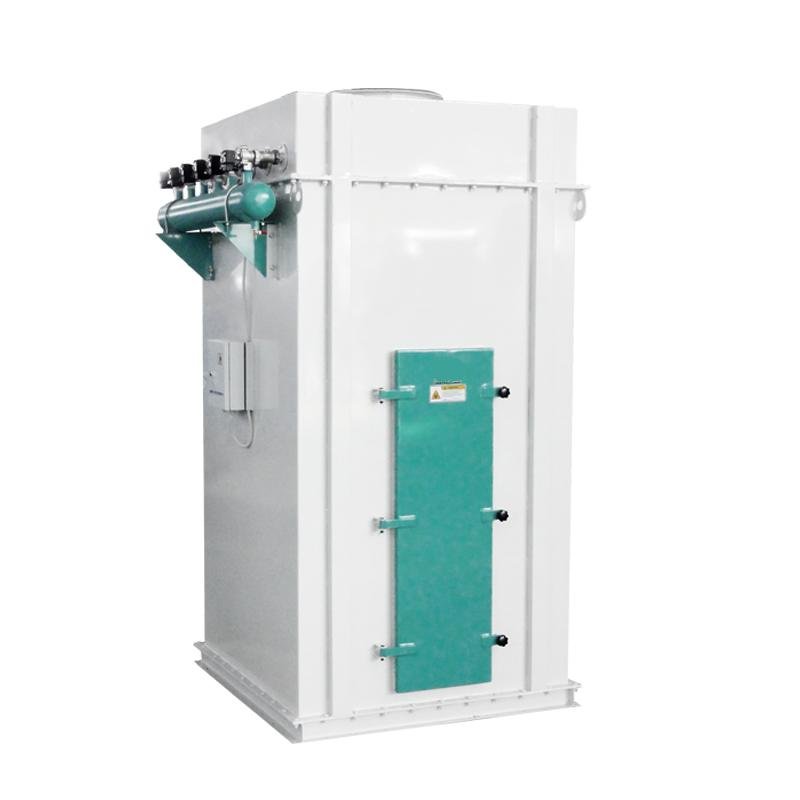
Description
Technical Specifications & Operational Advantages
Pulse Cleaning System Engineering
-
Valve Configuration: High-flow diaphragm valves with 1.5-3.0 inch orifice diameters
-
Air Reservoir Capacity: 2-10 gallons per valve bank for consistent pulse energy
-
Nozzle Design: Venturi-effect nozzles optimizing air-to-cloth cleaning efficiency
-
Pulse Duration: 80-150 milliseconds with precise electronic timing control
Filtration Media & Construction
-
Filter Bag Materials: Polyester, Nomex, Ryton, or PTFE membrane laminates
-
Air-to-Cloth Ratio: 3:1 to 6:1 depending on application and dust characteristics
-
Pressure Capability: -10 to -25 inches water column operating differential
-
Construction Standards: ASME-coded vessels for explosive applications
Control Systems & Monitoring
-
Differential Pressure Sensing: 0-30 inch water column with 1% accuracy
-
Programmable Logic: Customizable cleaning cycles and damper control
-
Remote Monitoring: Ethernet, Modbus, and 4-20mA connectivity options
-
Data Logging: Continuous performance tracking and maintenance alerts
Performance Comparison & Application Data
| Parameter | Square Pulse Filter | Conventional Baghouse | Performance Improvement |
|---|---|---|---|
| Compressed Air Consumption | 2-4 SCFM/1000 CFM | 4-8 SCFM/1000 CFM | 40-60% reduction |
| Filter Life | 18-36 months | 12-24 months | 50% increase |
| Differential Pressure | 3-6 inches WC | 5-10 inches WC | 30-50% lower |
| Collection Efficiency | 99.9-99.99% | 99.5-99.9% | Significant improvement on sub-micron particles |
Industry-Specific Performance Metrics:
-
Wood Processing: 99.97% efficiency on 0.3-5.0 micron particles at 5:1 air-to-cloth ratio
-
Pharmaceutical: 99.99% on API powders with continuous <1 mg/m³ outlet concentration
-
Metalworking: 99.95% on fine metallic oxides with fire-resistant filter media
-
Food & Grain: USDA-compliant designs with CIP capability and allergen control
Industry Applications & Operational Benefits
Wood Processing & Furniture Manufacturing
Square pulse filters excel in handling coarse and fine wood dust simultaneously, a challenge for conventional systems. The square configuration allows for optimal bag spacing, preventing dust bridging and ensuring complete cleaning. One medium-sized furniture plant reported a 35% reduction in compressed air costs while maintaining constant 4.5-inch water column differential pressure, extending filter life from 18 to 30 months.
Pharmaceutical Production & API Handling
In pharmaceutical environments, square pulse filters provide the consistent performance required for potent compound containment. The precise pulse control prevents dust re-entrainment during cleaning cycles, maintaining integrity of the dust cake. A major pharmaceutical manufacturer achieved 99.99% collection efficiency on micronized active ingredients while reducing maintenance frequency by 60% compared to their previous reverse-air system.
Metalworking & Thermal Spray Operations
For metal dust and fume applications, square pulse technology handles the heavy dust loads characteristic of grinding and polishing operations while maintaining efficiency on sub-micron fumes from thermal processes. The robust construction withstands abrasive particles, with one automotive parts manufacturer reporting 28 months of continuous operation without filter replacement in their aluminum machining facility.
Food & Agricultural Processing
Sanitary square pulse filters feature rounded corners, polished surfaces, and quick-disconnect filter bags for thorough cleaning. In a cereal production facility, the implementation of square pulse technology reduced product loss through the dust collection system by 45% while meeting strict food safety audit requirements. The consistent pressure drop ensures stable airflow through pneumatic conveying systems.
Operational Economics & Maintenance Planning
Total Cost of Ownership Analysis
-
Capital Investment: $25,000-$150,000 based on capacity and materials
-
Installation Costs: 15-25% of equipment cost for ductwork and foundations
-
Energy Consumption: $1,200-$4,500 annually in compressed air (typical 25,000 CFM unit)
-
Filter Replacement: $3,000-$12,000 every 2-3 years depending on application
Maintenance Optimization Strategy
-
Daily: Visual inspection, pressure differential recording
-
Weekly: Compressed air system check, valve operation verification
-
Monthly: Filter condition inspection, dust discharge system check
-
Annually: Complete system inspection, structural integrity verification
Performance Monitoring Parameters
-
Differential Pressure Trend: Early indicator of filter condition and cleaning effectiveness
-
Valve Operation Frequency: Optimized based on dust loading conditions
-
Outlet Emissions Monitoring: Continuous compliance verification
-
Compressed Air Consumption: Efficiency metric for cleaning system
Expert Q&A for Facility Engineers
Q1: How does the square configuration improve performance over cylindrical designs?
A: The square layout allows for optimal bag spacing and arrangement, eliminating dead zones where dust can accumulate. This configuration ensures uniform air distribution across all filter elements and enables more efficient pulse propagation. The result is more consistent cleaning and reduced potential for hopper bridging, particularly important for cohesive dusts.
Q2: What is the optimal compressed air pressure for square pulse systems?
A: Most systems operate effectively at 80-100 PSIG, significantly lower than the 100-125 PSIG required by many conventional systems. The key is consistent pressure at the pulse valve, not just at the compressor. Proper air line sizing and minimal distance from the air reservoir to the valves are critical for maintaining pulse energy while reducing overall consumption.
Q3: How do we determine the correct cleaning cycle timing for our application?
A: Start with pressure-based cleaning rather than timed intervals. Set the cleaning system to activate when differential pressure reaches 5-6 inches WC and continue until it drops to 3-4 inches WC. This approach adapts to varying process conditions and prevents over-cleaning (which reduces filter life) or under-cleaning (which increases energy consumption).
Q4: What are the most common causes of premature filter failure?
A: The top three causes are: improper filter media selection for the application, excessive moisture (leading to blinding), and abrasion from high velocity or particulate loading. Chemical incompatibility and temperature excursions account for most remaining failures. Proper specification during design phase prevents 80% of premature failure issues.
Q5: Can square pulse filters handle explosive dusts safely?
A: Yes, when properly equipped with explosion venting, isolation valves, and pressure-rated construction. Many square pulse filters are available with NFPA-compliant explosion protection systems including vent panels, chemical suppression, or flame front diverters. The square design actually facilitates more effective explosion vent placement compared to cylindrical units.



Reviews
There are no reviews yet.