
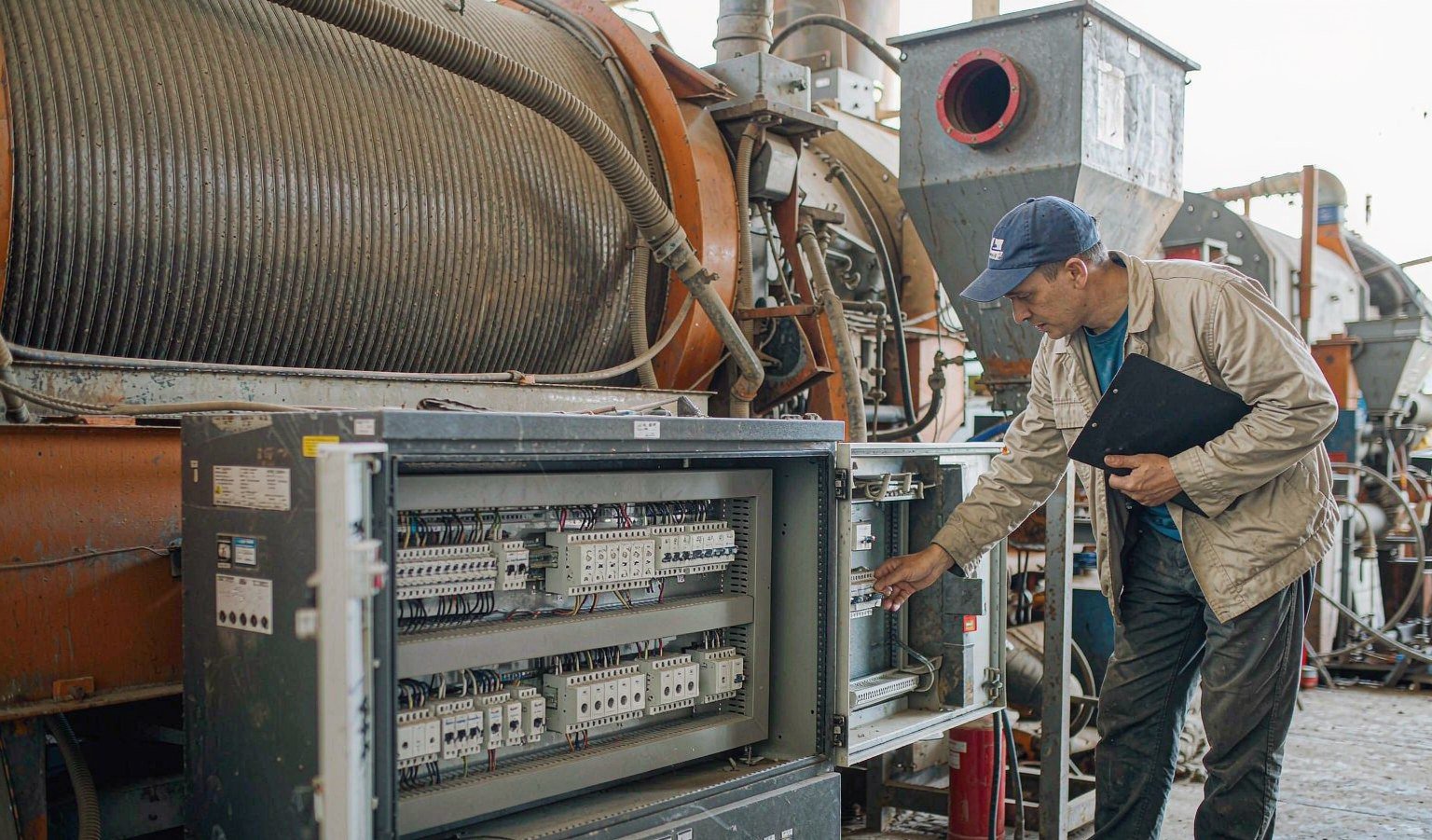
Buyers of pellet machinery outside the EU often treat CE marking as a sticker the factory puts on before shipping. Buyers inside the EU cannot afford to: placing non-conforming machinery on the single market is a market-surveillance issue, and the mark is a manufacturer’s self-declaration that the machine meets specific safety law. That declaration can be genuine, sloppy, or forged — and the difference is verifiable in about an hour with the checklist below. This article walks through the eight checks that matter on a pellet mill, hammer mill, mixer or dryer purchase, and the regulatory transition every 2026 buyer needs to know about.
First, Know Which Law Applies — It Is Changing
EU machinery safety is currently governed by the Machinery Directive 2006/42/EC. It is being replaced by the Machinery Regulation (EU) 2023/1230, which applies from 20 January 2027 — with no transition period: machinery placed on the EU market on or after that date must conform to the new Regulation, while machinery placed on the market before it must conform to the Directive. The European Commission’s machinery sector page lays out the timeline and the main changes, including digital documentation, cybersecurity provisions for safety functions and expanded notified-body requirements (European Commission, machinery). The UK government’s policy review independently confirms the same January 2027 application date and summarizes the key changes from a buyer-country perspective (GOV.UK, machinery safety legislation).
For buyers the practical consequence is simple: a machine shipped in 2026 is certified under 2006/42/EC, and its Declaration of Conformity should say exactly that. A quotation for delivery in late 2026 with installation in early 2027 is a contract detail worth pinning down, because “placing on the market” is the trigger, not installation.
One more scope note: complete lines are often supplied as partly completed machinery — individual machines that get integrated on site. Those carry a Declaration of Incorporation rather than a Declaration of Conformity, and the integrator (sometimes you, the buyer) is responsible for the final assembly’s conformity. Ask which documents you are getting before the containers ship, not after.
Check 1: The Declaration of Conformity Says the Right Things
The DoC is the core legal document. Under the Machinery Directive it must identify the manufacturer and authorized representative, describe the machinery (model, serial number), name the directives it conforms to, list the harmonized standards used, and carry the signature of a person with authority to bind the manufacturer. Read the actual PDF, not a sales-page image of it. The details buyers should verify: the directive cited includes amendments; the standards listed are real standard numbers (EN ISO 12100 for risk assessment is the baseline for virtually all machinery); the description matches the machine on the invoice, including model designation; and the signatory, company and date are consistent. A DoC signed by a salesperson without authority, citing no standards, is a red flag independent of any mark.
Check 2: The Mark Itself — On the Machine, Not in the Brochure
The CE marking must be affixed to the machinery itself, be visible and legible, and follow the official proportions — the Commission’s CE marking overview documents the rules, including the minimum 5 mm letter height. Walk around the actual machine: a nameplate with manufacturer, model, serial and CE marking should be permanently attached. Machines that only show the mark on the crate or in the manual are not marked. A nameplate missing the serial number also breaks the traceability between machine and DoC — ask for it to be added before shipment.
Check 3: Risk Assessment and Technical File Exist
Behind every valid DoC sits a risk assessment and a technical file. The risk assessment should follow EN ISO 12100’s method — hazards identified per machine function, risk evaluated, measures taken in the three-step hierarchy (inherently safe design, safeguarding, information for use). The technical file must be retained by the manufacturer for ten years and includes drawings, calculations, test reports and standards applied. As a buyer you will not receive the full file, but you can and should request: the risk assessment summary for the machine you are buying, the list of harmonized standards applied, and the test reports relevant to the hazards you care about. A supplier who cannot produce these on request is telling you how the file was created — which is to say, it may not have been.
Check 4: Guards and Access — Where Pellet Mills Actually Hurt People
On a pellet mill the serious hazards are specific: the rotating die and rollers, the nip points around drives, and hot surfaces. The conformity evidence lives in the guarding. Verify: fixed guards on the die cover and belt guards that need tools to open; interlocked or double-key access where operators must reach the die for changes and roller adjustment; guard openings sized to the reach distances in EN ISO 13857. Ask how the machine prevents restart after a guard is opened mid-run, and physically check the interlock on the demo unit before shipment. Our pellet mill with conditioner page shows the guarding arrangement we ship as standard — use it as a comparison baseline when evaluating other offers.
Check 5: Electrical Safety to EN 60204-1
Electrical equipment of machinery is covered by EN 60204-1, and in a dusty pellet plant the details matter more than usual. On the machine: a lockable main disconnect, an emergency stop that cuts motion without removing power needed for safety, conductors sized and protected correctly, and enclosures with ingress protection appropriate to dust — plus internal wiring that matches the drawings in the manual. On the acceptance test: ask for the insulation resistance and protective-bonding test results required by the standard. A control cabinet full of unlabeled wiring will fail an inspector’s first impression and your maintenance team’s first fault-finding shift.
Check 6: Combustible Dust — The Directive Does Not Cover It Alone
Feed and biomass pellet plants handle explosible dust, and buyers sometimes assume CE marking means explosion risk was addressed. It was not, automatically. Explosion protection of equipment used in potentially explosive atmospheres falls under the ATEX directives, and the process-level hazard analysis is the operator’s obligation in most jurisdictions. What to check on the machine: whether the manufacturer has assessed ignition sources inside dust-handling enclosures (hammer mills, bucket elevators, dust collectors), whether hot surfaces and sparking bearings are controlled, and whether explosion venting or suppression is specified for the equipment where a deflagration could develop. A supplier who answers “the pellet mill is CE marked, that covers it” has just told you to keep looking.
Check 7: Noise Declaration
Noise emission is a formal part of the Directive’s information-for-use requirements. Where the A-weighted emission sound pressure level at workstations exceeds 70 dB(A), the instructions must state it; sound power levels must be declared where sound pressure exceeds 80 dB(A). Feed mills run loud equipment, so the manual should contain a noise declaration with measured or declared values per duty cycle — not a blank field. Beyond the paperwork, the declared number tells you something real about your working environment and your hearing-protection program.
Check 8: Instructions and Language
Instructions must be supplied in an official EU language of the country where the machine is used — which Member States determine individually. Check the manual you receive, not the promise in the offer: a machine delivered to Germany with English-only instructions is non-conforming in the destination market. Also verify the manual actually contains the sections the Directive requires: intended use, residual risks, assembly and installation data, maintenance schedule, and the noise and emission declarations from Check 7. The 2023 Regulation will also permit fully digital instructions with paper on request, so the mechanism is changing even though the obligation is not.
The Eight Checks, Summarized
| # | Check | Evidence to request | Red flag |
|---|---|---|---|
| 1 | Declaration of Conformity content | The actual signed DoC | No standards listed; wrong directive; no serial number |
| 2 | Mark affixed to machine | Nameplate photos with serial + CE | Mark only in manual or on crate |
| 3 | Risk assessment & technical file | Risk assessment summary; standards list | “We follow international standards” with no document |
| 4 | Guards and interlocks | Guard drawings; interlock test on demo unit | Die access without tool or interlock |
| 5 | Electrical safety | EN 60204-1 test report; IP rating of enclosures | No lockable isolator; unlabeled cabinet wiring |
| 6 | Combustible dust / ATEX | Ignition-source assessment for dust enclosures | “CE covers everything” |
| 7 | Noise declaration | Declared dB(A) values in the manual | Blank or missing noise section |
| 8 | Instructions & language | Manual in destination-market language | “Translation will follow after delivery” |
What Changes Under the 2027 Machinery Regulation
If your delivery lands after 20 January 2027, the document set gains items. The Regulation aligns machinery law with the New Legislative Framework (adding explicit importer and distributor obligations), allows digital instructions and DoCs with paper on request, introduces defined “substantial modification” duties for machines altered in service, extends safety requirements to software and to AI-based safety functions, and requires third-party conformity assessment for a defined list of higher-risk machinery categories. Buyers do not need to memorize the law — but they should ask every 2027-delivery supplier one question: are you certifying to 2006/42/EC or to Regulation 2023/1230, and does your DoC match your delivery date? The answer separates organized manufacturers from improvised ones.
| Aspect | Directive 2006/42/EC (until 19 Jan 2027) | Regulation 2023/1230 (from 20 Jan 2027) |
|---|---|---|
| Legal form | Directive — transposed per Member State | Regulation — directly applicable EU-wide |
| Instructions / DoC | Paper-based expectation | Digital permitted; paper on request |
| Software & AI | Not specifically addressed | Safety-relevant software and self-evolving (AI) functions covered; some need notified bodies |
| Cybersecurity | Not addressed | Protection against manipulation of safety-relevant data required |
| Importers/distributors | No explicit duties | NLF obligations: verification, labeling, traceability |
| Modified machinery | “New machinery” by modification, loosely defined | Defined “substantial modification” regime |
What CE Marking Does Not Tell You
CE marking says the machine meets EU safety law. It says nothing about capacity, durability or pellet quality — a press can be fully conforming and still miss its rated throughput. Performance guarantees belong in the purchase contract: rated capacity on your formulation, specific energy in kWh/t, mixing uniformity, and the spare-parts availability that keeps the line running. Our import checklist covers the commercial side of that conversation (what to ask before importing a pellet machine), and consumable planning — dies, roller shells, screens — is where the spare parts selection starts. Use the CE checklist for safety conformity and the contract for performance; neither substitutes for the other.
Bottom Line
- CE marking is a self-declaration, so buyers verify: the DoC’s content, the mark on the machine with a serial number, and the risk assessment behind them.
- On pellet machinery, the checks that catch real problems are guards and interlocks at the die, EN 60204-1 electrical evidence, and an honest treatment of combustible dust risk — which the Directive alone does not fully cover.
- From 20 January 2027, Regulation (EU) 2023/1230 replaces the Directive with no transition period. Ask every supplier which instrument their DoC cites and whether it matches the delivery date.
- A missing manual language, a blank noise declaration and an “it covers everything” answer on dust are the three cheapest red flags to spot before the containers ship.
Before your next pellet machine order, run the eight checks against the actual documents — one hour of review beats one customs inspection. If you want a second pair of eyes on a conformity document set, our engineering team reviews supplier paperwork for buyers as part of pre-order consultations on the full feed pellet machine range.