
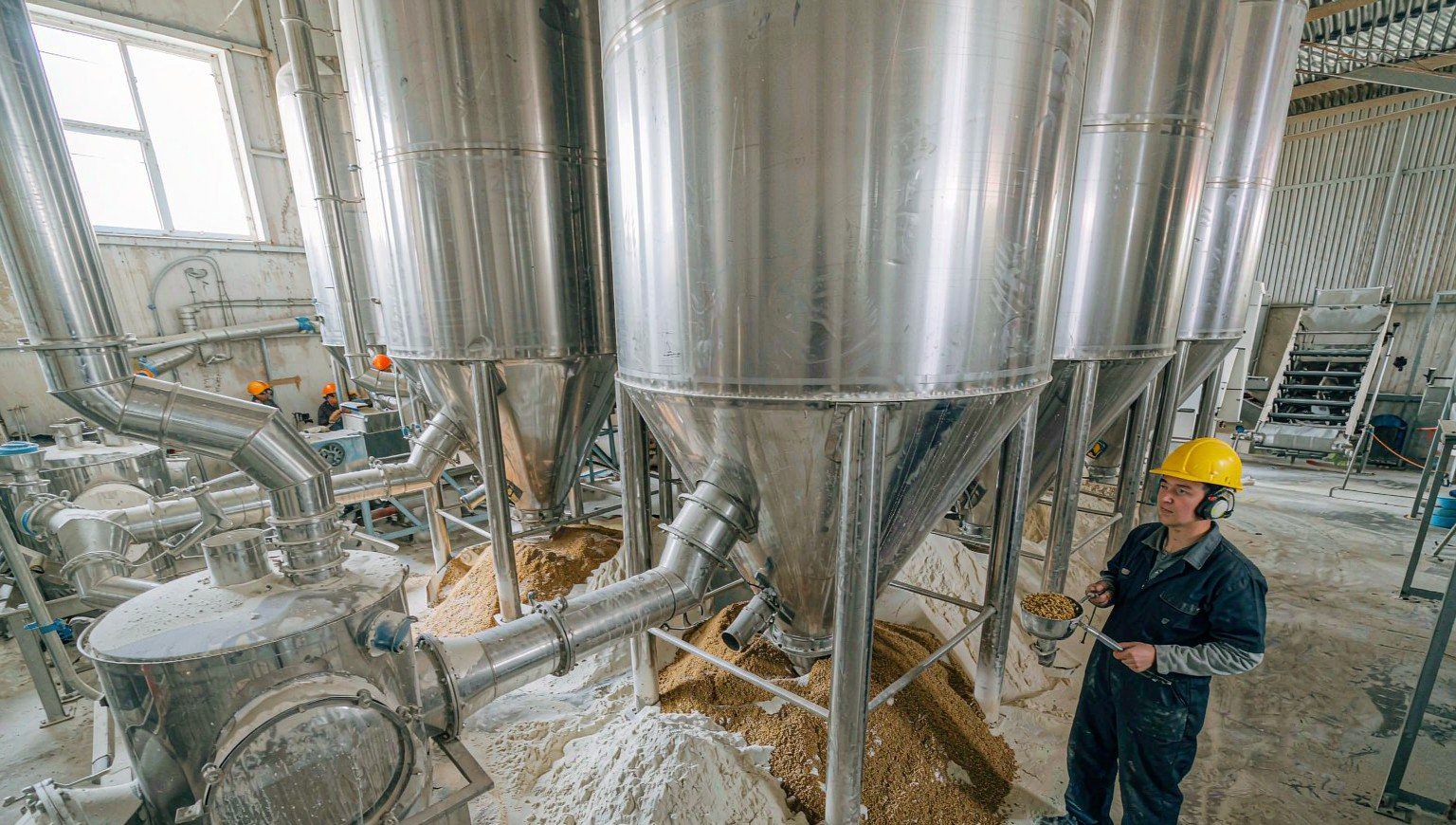
Two feed mills can run the same pellet mill brand, the same die specification and the same steam system, and still deliver pellets with a five-point difference in PDI. In most of those cases the variable that separates them is not the hardware — it is the formula. A widely cited industry review of pellet quality put numbers on this: roughly 40 percent of the variation in pellet durability traces back to feed formulation, compared with about 20 percent to conditioning, 15 percent to die specifications and only 5 percent to cooling and drying (Abdollahi et al., review of pellet quality factors). Research at Kansas State University reached the same conclusion from a different direction: across model diets built from corn, soybean meal and soybean oil, formulation behaved as the single most influential variable on physical pellet quality (Cavalcanti and Behnke, Cereal Chemistry, 2005).
For anyone specifying a new feed line, that finding matters commercially. It means the die compression ratio and the conditioning setpoints you negotiate with your equipment supplier should be sized to your ingredient slate, not to a brochure diet. This article walks through how each major component of a corn–soybean meal formula — starch, protein, fat, fiber and moisture — behaves inside the pellet press, what by-products such as DDGS change, and how to translate the formula into die, steam and process decisions.
Where Pellet Quality Is Actually Decided
The factor partition summarized below comes from Reimer’s analysis of European diets, as reproduced in the pellet quality review cited above. It is directional rather than exact — it was calculated on winter-cereal-heavy diets — but the ranking holds up across independent studies: formulation first, conditioning second, die hardware third.
| Factor | Approximate share of pellet durability | What sits inside this factor |
|---|---|---|
| Feed formulation | ~40% | Ingredient ratios: starch, protein, fat, fiber, moisture binding capacity |
| Heat conditioning | ~20% | Steam quality, temperature, retention time in the conditioner |
| Pellet press die | ~15% | Die hole diameter, effective length, compression ratio (L/D) |
| Particle size and other process factors | ~20% | Grind fineness and distribution, feed rate stability, die speed |
| Cooling and drying | ~5% | Counterflow cooler airflow and residence time |
The practical reading of this table: when a customer complains that pellets from a new line are soft, the first document to open is the formulation sheet, not the pellet mill manual. The second is the pellet durability index test record, because it tells you whether you are looking at a binding problem or a fines-handling problem.
The Five Formula Levers, and How Each One Behaves
Ingredient characteristics affect two different outputs at once: the quality of the pellet that leaves the die, and the rate at which the die produces it. A summary adapted from California Pellet Mill’s technical literature, published in a US Grains Council pelleting reference, captures both columns in one view (US Grains Council, Pelleting DDGS Diets for Swine, Chapter 22).
| Ingredient characteristic | Effect on pellet quality | Effect on pellet mill production rate |
|---|---|---|
| Moisture | Higher moisture improves pellet quality | Not a direct factor |
| Protein | Higher protein improves pellet quality | Not a direct factor |
| Fat | Above roughly 2% lipid content, pellet quality declines | High lipid content increases production rate |
| Fiber | May improve pellet quality | High fiber content decreases production rate |
| Starch | Reduces pellet quality unless gelatinized with sufficient heat and moisture | Not a direct factor |
| Bulk density | Not a direct factor | Higher density increases production rate |
| Particle size | Medium or fine particles improve pellet quality | Medium or fine particles increase production rate |
Notice the asymmetry: fat is the only lever that helps throughput while hurting durability, which is exactly why fat placement — discussed further down — is where formulators and process engineers have to cooperate rather than argue.
Starch: the raw material for binding, but only when it gelatinizes
Starch is the backbone of most corn-based formulas, and in raw form it does almost nothing for the pellet. Binding happens when starch gelatinizes — granules absorb water and swell under heat and shear — and the die is where most of that actually occurs. Stevens’ classic work, measured with differential scanning calorimetry on ground corn, showed that raising the conditioning temperature from 23 °C to 80 °C did not raise gelatinization in the finished pellet: whole-pellet gelatinization actually fell from 41.9% to 28.0%, while the outer layer of pellets pressed at 23 °C showed 58.3% gelatinization from die shear alone (Watt Feed Strategy, Factors Affecting Pellet Quality, Table 19-11). The conclusion for daily operation: conditioner temperature matters mostly because it delivers moisture and plasticization to the die, not because the conditioner itself finishes the gelatinization job.
Cavalcanti and Behnke’s mixture experiments add a subtlety that pure “starch binds” logic misses: pellet quality responded quadratically to starch level, improving through the low and middle of the range but turning downward as starch approached the top of the experimental region. Corn-heavy formulas are not automatically the most durable ones; they need the grinding and conditioning support described below.
Protein: the quiet contributor, especially from soybean meal
In the same KSU series, protein — and soybean meal protein in particular — had a positive effect on PDI across the mixture space. Heat and moisture during conditioning plasticize protein bodies, letting them deform and weld particles together inside the die hole. This is one reason corn–soybean meal diets pellet more forgivingly than high-fiber or high-mineral formulas, and why a broiler grower diet at 20–22% crude protein usually shows better Holmen values than a low-protein layer diet run on the same die. It is also worth stating plainly: if you reformulate toward cheaper, protein-diluted ingredients, expect PDI to move, and adjust the die or conditioning window before the customer notices.
Moisture: The Cheapest Binder in the Formula
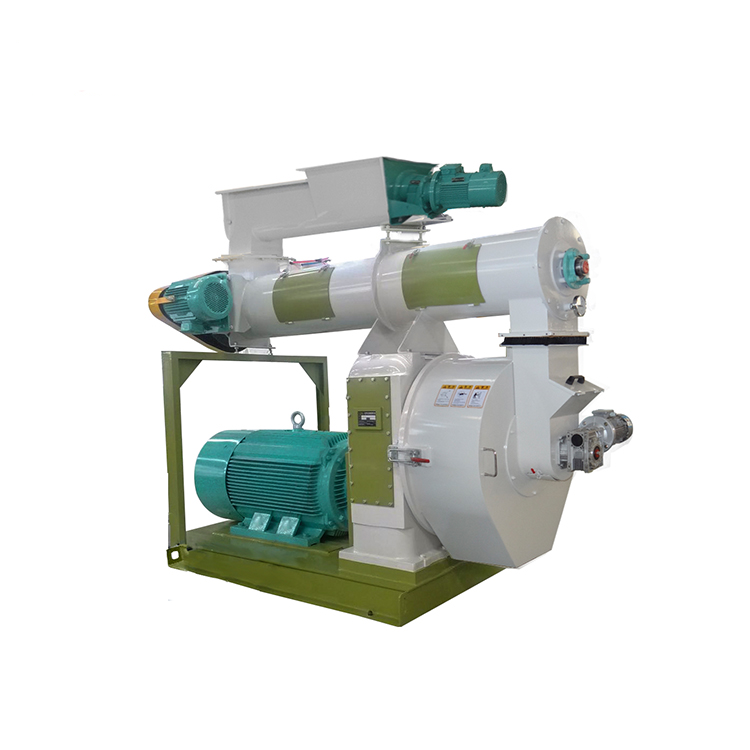
Moisture is listed first in the CPM table for a reason, and it is the one lever that costs almost nothing at the margin. Dry mash glides through the die without plasticizing; moist mash deforms, packs and welds. Every degree of steam you can put into the mash without crossing the moisture ceiling buys durability for free, which is why conditioning capacity deserves as much attention in a quote as the pellet mill motor size.
Kansas State University pelleting guidance frames the operating window that most commercial plants aim for: mash temperatures around 80–87 °C (roughly 180–200 °F) at the die, with feed moisture in the 17–18% band as it enters the die. Push feed moisture above about 18% and the die begins to slip and choke — the same steam that binds pellets at 17% turns into a plugged die at 19%. That ceiling is where formula and hardware meet: a corn–soybean meal diet carrying high-moisture corn or wet distillers grains enters the die with less steam headroom, so the same 17% target must come from tighter drying at intake rather than from the conditioner.
Two practical notes follow from this. First, the classic rule of thumb — roughly one percentage point of mash moisture gained per 14 °C of conditioning temperature rise — lets you sanity-check any conditioner quotation: if a supplier promises 85 °C conditioning on a mash entering at 11% moisture, the arithmetic says the die receives around 14% unless water is added separately, and that gap shows up as mediocre durability, not as a mystery. Second, moisture interacts with fat placement: every point of mixer-added fat reduces the steam uptake the mash can absorb, which is one more reason high-fat formulas run dry at the die and need the die hardware to carry more of the binding work.
Fat: Where It Goes Matters More Than How Much
Fat is the most commercially loaded ingredient in the formula. It raises energy density, which nutritionists want, but it interferes with the water-and-heat mechanism that makes pellets stick, which process engineers own. The interference is mechanical: hydrophobic lipid films coat particles, block steam penetration, and lubricate the die hole so mash spends less time under compression.
The dose-response evidence is not subtle. A review of pellet quality factors compiles three data points worth keeping on the wall of the control room:
- Moritz and co-workers compared 30 g/kg with 65 g/kg added oil in broiler diets: PDI fell from 81.6% to 62.1%.
- Briggs and co-workers reported that when dietary ether extract rose from 29 g/kg to 75 g/kg, PDI collapsed from 88.8% to 57.2%.
- California Pellet Mill’s guidance places the practical ceiling at roughly 20 g/kg (2%) of mixer-added fat before corn–soybean meal diets start losing durability.
Cavalcanti and Behnke’s second mixture study quantified the same boundary from the other side: in model systems, a strong negative effect on PDI appeared once mixer-added soybean oil exceeded about 6.5%. The exact number moves with grind, die and conditioning, but every dataset agrees on the direction and on the order of magnitude.
The industry’s answer is post-pellet liquid application (PPLA): make the pellet at the fat level the die can tolerate, then spray the remainder onto cooled pellets. Schramm and co-workers tested this directly, completing a total of 35 g/kg fat with different mixer/PPLA splits. With all 35 g/kg in the mixer, PDI was 86%; with 25 g/kg sprayed on post-pellet and only 10 g/kg in the mixer, PDI reached 97%. The best measured combination was about 11.7 g/kg in the mixer and 23.3 g/kg post-pellet. The equipment implication is straightforward: if your market demands high-energy broiler or aqua feeds, plan for an oil addition system at the coating point during the layout stage, not as a retrofit squeezed between the cooler and the bagging line.

By-Products: What DDGS Actually Does to Pelleting
DDGS deserves its own section because inclusion rates keep climbing in corn-growing markets and because its reputation for “ruining pellets” is only half accurate. DDGS brings fiber and residual oil; as inclusion rises, bulk density of the mash falls, which drags production rate down. But the durability story is genuinely inconsistent across studies, and the reason is the oil content of the DDGS itself — partial corn-oil extraction at US ethanol plants leaves anywhere from 5% to 13% fat in the product.
| Study | Design | PDI outcome |
|---|---|---|
| Fahrenholz (2008) | 0 / 10 / 20% DDGS, 3.97 × 31.75 mm die, 85 °C conditioning | 90.3 → 88.3 → 86.8 PDI as DDGS rose; bulk density also fell. Author judged the drop of minor practical importance |
| Stender & Honeyman (2008) | 0 vs 20% DDGS in pelleted swine diets | PDI fell from 78.9 to 66.8 — a large drop |
| Feoli (2008) | 30% DDGS added to corn–SBM swine diets | PDI improved from 88.5 to 93.0 |
| De Jong (2013) | Corn–SBM vs 30% DDGS nursery diets, 3.18 mm die | No difference: PDI 93.3–96.9, fines 1.2–8.0%, rate 1,098–1,287 kg/h |
| Yoder (2016) | 15/30% reduced-oil vs high-oil DDGS, 4.0 × 32 mm die, constant 680 kg/h | Reduced-oil DDGS 88.0 PDI vs high-oil 82.8; inclusion level and conditioning temperature (65.6 vs 82.2 °C) had no effect |
Sources: all rows are compiled in the US Grains Council chapter on pelleting DDGS diets for swine.
The defensible summary for a project plan: specify reduced-oil DDGS when durability targets are strict, expect a modest PDI and bulk-density penalty at 10–20% inclusion, and treat 30% inclusion as feasible only when the rest of the process — grind, conditioning, die L/D — has margin. A dedicated review of high-DDGS pelleting is beyond this article’s scope, but the same logic carries into other fibrous by-products such as rice bran or sunflower meal, which trade durability for cost in similar ways.
Translating the Formula into Equipment Decisions
Formulation is fixed by nutrition; the equipment has to absorb its consequences. Three translation rules cover most corn–soybean meal scenarios.
1. Match the die L/D to the binding capacity of the formula
Starch-rich, protein-supported diets bind readily, so a moderate compression ratio reaches target PDI without over-driving the mill. As formulas shift toward high fat, high fiber or mineral-heavy premixes, the same durability target demands a higher L/D — which raises specific energy and the risk of choke-feeding problems. Recent pelleting research found that raising die L:D from 5.6 to 8 improved pellet quality but increased pellet mill energy consumption, with die L/D ranking second only to conditioning temperature among seven evaluated variables for energy impact (in-text citation: Translational Animal Science, 2020, corn-variety pelleting study). Our earlier article on die compression ratio works through material-by-material starting points; use it together with the formulation review in this article when your ingredient slate sits away from the “standard” corn–SBM profile.
2. Buy conditioning capacity that matches the moisture the formula can take
Steam conditioning is the cheapest lever you have, because added moisture both plasticizes and lubricates. As a rule of thumb quoted across pelleting literature, each 14 °C rise in conditioning temperature adds roughly one percentage point of mash moisture (in-text citation: summary accompanying Fahrenholz, 2012). The same study stream showed that lifting conditioning temperature from 74 °C to 85 °C improved PDI linearly without raising energy consumption per ton. This is why we treat the conditioner as a primary spec item, not an accessory — see the steam-side detail in our guide to steam conditioning in feed pelleting, and the hardware side in our feed pellet mill with conditioner.
3. Adjust grind before you adjust anything downstream
The CPM table’s last row works in your favor on both columns: medium-to-fine particles improve quality and rate. When a formula gets cheaper and more fibrous, the first corrective step is usually a finer screen in the hammer mill and attention to the oversized tail of the distribution — not a die change, and not a binder. Grinding energy rises as screens get finer, but in corn–soybean meal diets that cost is usually recovered in throughput and in fewer rejects at the bagging scale.
Formula-Driven Pellet Problems: Symptoms, Causes, First Fixes
When pellet quality drifts after a reformulation, the failure signature usually points at the ingredient that changed. The patterns below recur across feed plants on nearly every continent, and each one traces back to a mechanism covered earlier in this article.
- Pellets look smooth but crumble in the bag. Classic binding failure, not a pressure problem. Check mixer-added fat first: above the 2% zone for corn–SBM diets, lipid films block steam uptake and the pellet leaves the die looking acceptable with weak internal welds. The fix is to move fat post-pellet, as the Schramm PPLA data showed.
- Mill rate falls after a by-product addition. Falling mash bulk density, not the die. High-fiber or bran-rich ingredients slow the die’s throughput even when durability holds. Expect it, re-rate the line honestly, and compensate with grind fineness rather than by pushing the feeder past its stable range.
- PDI drops whenever seasonal corn arrives. New-crop and higher-moisture swings change both starch availability and steam headroom. Hold 20–30 minutes of mash retention and re-run the durability test across the transition week rather than reacting to a single shift’s data.
- Fines concentrate at one end of the silo. Segregation follows particle size distribution, and the oversized tail of a coarse grind is where weak pellets and unbound particles collect. A screen change in the hammer mill usually fixes what a die change cannot.
- Durability rises and rate collapses at the same time. You are over-compressed: an L/D chosen for a fibrous trial diet is now choking a fat-supplemented one. Rebalance by conditioning moisture first, then die choice.
None of these signatures replaces a proper durability test, but together with a PDI record they shorten the path from symptom to cause. If the problem persists after the formula-side checks, the process-side guides — the durability test breakdown and the steam conditioning guide — cover the conditioning and cooler variables that sit downstream of formulation.
A Short Worked Scenario
Consider a 5 t/h poultry line in Southeast Asia running a corn–soybean meal grower diet with 5% rice bran and, in harvest season, 15% local DDGS. Baseline PDI with the 3 mm × 30 mm die sits at 92. When the DDGS batch arrives, bulk density drops and the mill slows; PDI drifts to 89–90. The corrective sequence that costs the least: verify DDGS oil content against the supplier’s spec, tighten the hammer mill screen one step, raise conditioning temperature within the moisture headroom of the formula, and only then consider re-drilling a higher L/D die or adding a binder. Every step in that sequence is cheaper than rejecting a truckload of bagged feed, and each one is justified by the published dose-response data summarized above.
For buyers comparing suppliers, one more implication deserves emphasis. When you send a new supplier your formulation for line sizing, send the real one — including seasonal by-product swings and mixer-added fat levels — because the die and conditioner recommendations that come back are only as good as the formula they were sized against. A supplier who asks for your formulation details before quoting a poultry and livestock feed pellet mill is doing the 40% of the job that actually determines whether the pellets hold together.
What to Measure Before the Formula Reaches the Die
Because formulation carries the largest share of durability, a feed plant that treats ingredient arrival as a purely nutritional event gives up process control for free. Three cheap measurements on incoming raw materials predict most of what the pellet mill will do that week.
Mash moisture. Corn arriving at 14% versus 12% changes how much steam the formula can absorb before the die slips. A moisture balance on every batch, rather than one reading per truckload, keeps the conditioning window honest.
Fat content of by-products. As the Yoder trial showed, the difference between reduced-oil and high-oil DDGS was worth roughly five PDI points at identical inclusion and conditioning — larger than most binder effects. A monthly lab check on by-product fat, or a written supplier spec with tolerance bands, converts a random variable into a managed one.
Particle size and its distribution. The mean matters, but the oversized tail decides whether weak pellets and fines appear. A 20-minute sieve stack analysis on the hammer mill discharge catches screen wear before the bagging scale does.
None of this requires laboratory-grade instrumentation; all three measurements fit on a clipboard at intake. Plants that run them routinely discover that most “pellet mill problems” were formulation and ingredient problems wearing a mechanical costume — and the 40% share of formulation in the durability equation, from the Reimer partition that opened this article, explains why that costume works so well.
Bottom Line
- Formulation is the largest single lever on pellet durability — roughly 40% of the variation by the Reimer partition — ahead of conditioning, die hardware and cooling.
- Starch binds only after gelatinization, which mostly happens in the die, not the conditioner; corn-heavy formulas need grind and moisture support to deliver their potential.
- Soybean meal protein is your friend at the die; protein-diluted reformulations should trigger a die or conditioning review.
- Keep mixer-added fat near or below the 2% zone for corn–SBM diets and move extra energy to post-pellet coating — the Schramm data show a 9-point PDI recovery from that split alone.
- DDGS penalizes rate more than quality, and the penalty tracks its oil content: specify reduced-oil DDGS when durability matters.
- Translate the formula into hardware: moderate L/D for forgiving diets, higher L/D and more conditioning capacity for fibrous or fatty ones, and always quote against the real seasonal formula.