

Buyers ask for “A1 pellets” the way they ask for “8 mm pellets” — as a label. The label comes from ISO 17225-2, the international standard for graded wood pellets, and it is not a marketing tier: it is a table of measured limits on moisture, ash, durability, fines, and chemistry. For someone buying equipment rather than fuel, that table is the design brief. This article reads the standard the way a plant engineer should, then maps each requirement to the process decisions that make it achievable.
The Standard in One Paragraph
ISO 17225-2 classifies wood pellets into three graded classes for non-industrial use — A1, A2, and B — plus three industrial classes, I1, I2, and I3. A1 is the premium residential grade, A2 the standard residential grade, B the non-residential grade, and the I-classes serve industrial boilers and co-firing. The classes differ mainly in ash limit, fines limit, nitrogen limit, and raw material rules, while sharing the same moisture, calorific value, and bulk density floors. A 2023 review in the journal Materials tabulates the full requirement set drawn from the standard; the values below follow that summary.
The Grade Table, Read Like an Engineer
Table 1 lists the limits that actually drive design decisions. Values are per ISO 17225-2 as summarized in the Materials review, with the ENplus overlay noted separately.
| Parameter | A1 | A2 | B | I1 | I2 | I3 |
|---|---|---|---|---|---|---|
| Moisture | ≤10% | ≤10% | ≤10% | ≤10% | ≤10% | ≤10% |
| Ash | ≤0.7% | ≤1.2% | ≤2.0% | ≤1.0% | ≤1.5% | ≤3.0% |
| Mechanical durability | ≥97.5% | ≥97.5% | ≥96.5% | ≥97.5% | ≥97.5% | ≥96.5% |
| Fines (≤3.15 mm) | ≤1% | ≤1% | ≤1% | ≤4% | ≤5% | ≤6% |
| Net calorific value | ≥16.5 MJ/kg | ≥16.5 MJ/kg | ≥16.5 MJ/kg | ≥16.5 MJ/kg | ≥16.5 MJ/kg | ≥16.5 MJ/kg |
| Bulk density | ≥600 kg/m³ | ≥600 kg/m³ | ≥600 kg/m³ | ≥600 kg/m³ | ≥600 kg/m³ | ≥600 kg/m³ |
| Nitrogen | ≤0.3% | ≤0.5% | ≤1.0% | ≤0.3% | ≤0.3% | ≤0.6% |
| Chlorine | ≤0.02% | ≤0.02% | ≤0.03% | ≤0.03% | ≤0.05% | ≤0.10% |
| Additives | ≤2% | ≤2% | ≤2% | ≤3% | ≤3% | ≤3% |
One distinction in this table trips up nearly every first-time buyer, so it is worth stating plainly: ISO 17225-2 and ENplus are not the same thing. ISO is the base standard; ENplus is a certification scheme run by the European Pellet Council that sits on top of ISO and tightens several requirements, most visibly mechanical durability — ENplus A1 requires ≥98.0% where the ISO base asks ≥97.5% — and adds supply-chain audits, bag quality checks, and delivery documentation rules (pellet.org). A plant can produce pellets that meet ISO A1 and still fail ENplus certification. If your market is European bagged fuel, design to the ENplus numbers, and walk through the audit items in our ENplus A1 requirements checklist before you buy anything.
What Actually Separates the Grades
Three properties do nearly all the separating work.
Ash is the pivot. The jump from A1 (0.7%) to A2 (1.2%) to B (2.0%) is a raw-material question before it is a process question. Debarked softwood sawdust runs around 0.3–0.5% ash and clears A1 comfortably; bark-inclusive chips run 1.5–4% and cap you at A2 or B no matter how good the die is. The same logic extends to the I-classes: I3 accepts up to 3% ash, which is agricultural-residue territory. Rice husk at 15–20% ash clears no wood-pellet grade at all and belongs to the non-woody standards instead — we cover that boundary case in our article on rice husk pelleting.
Durability and fines are the process pairs. Durability is measured on pellets; fines are what durability failures leave behind. The ISO base asks ≥97.5% durability for A1 and A2 (≥98.0% under ENplus), with fines capped at 1% for the non-industrial grades. Industrial classes relax fines to 4–6% because the fuel is burned in bulk handling systems that tolerate dust. A die and roller set in good condition, correct moisture, adequate cooling, and a screening stage before loadout together produce these numbers; how each lever works is covered in our article on pellet durability index.
Nitrogen and chlorine guard the boiler, not the bag. These limits exist because nitrogen becomes NOx and chlorine becomes corrosive deposits in the customer’s appliance. They are raw-material properties: clean stem wood passes easily, demolition wood and agricultural residues often do not. The standard’s grade logic is essentially “who is allowed to burn what,” and B-class is restricted to chemically untreated wood byproducts — treated or painted wood cannot be graded above B, and in practice it is kept out of the residential classes entirely. Peer-market guides for buyers make the same point from the fuel side, noting that ENplus does not permit B-grade pellets in retail bags at all (Kingwood Pellet; a broader buyer-oriented summary is at TCPEL).
How the Grade You Target Changes the Equipment List
Grade is not a shipping decision — it is set by choices made at the quotation stage. Table 2 maps each grade-critical parameter to the equipment that delivers it.
| Standard requirement | Where it is won or lost | Equipment implication |
|---|---|---|
| Ash ≤0.7% (A1) | Raw material sourcing and debarking | Debarker, cleaner stone/metal removal, per-lot ash testing; bark-inclusive feed means A2 at best |
| Moisture ≤10% | Drying and cooling | Dryer sized to wettest feed month; cooler brings pellets below spec before storage |
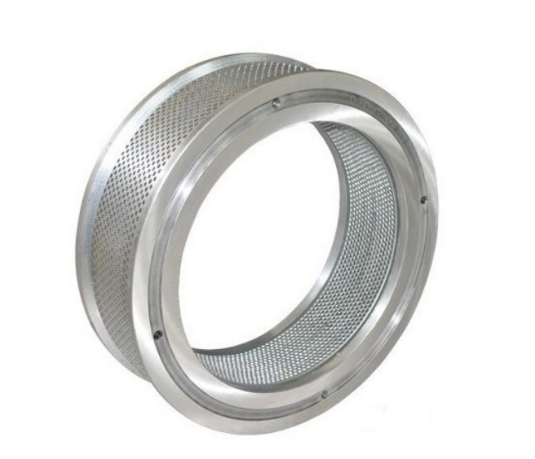
| Durability ≥97.5–98.0% | Die selection, conditioning, cooling | Die L/D matched to feedstock; conditioner with adequate retention; correct roller-die gap |
| Fines ≤1% (non-industrial) | Screening and bagging | Screener after cooler; fines recycle; low-abrasion loadout — bagging spec affects fines at delivery |
| Bulk density ≥600 kg/m³ | Die compression and die condition | Worn dies lose density first; die wear monitoring and spare die policy protect the spec |
| N, S, Cl limits | Raw material origin | Supplier segregation: no treated wood, no agricultural residues in the A-grade stream |
| Additives ≤2% | Process chemistry | Natural binders only in A grades; document any binder type and rate for the audit |
How the Numbers Are Actually Tested
The table only matters if the test methods behind it are consistent, and this is where certified supply differs from spot-batch supply. Mechanical durability is measured by tumbling a weighed pellet sample in a standardized drum and sieving the result — ISO 17831-1 is the tumbler method most laboratories run. Fines are sieved at 3.15 mm. Moisture is oven-dried. Bulk density is a filled-volume measurement, and calorific value comes from a bomb calorimeter. None of these methods is exotic, which is the point: a buyer with a sample splitter and a laboratory scale can reproduce every number on a spec sheet, and buyers in certified markets do.
The practical consequence for a producer is sampling discipline. Durability varies batch to batch with die wear, so a certification audit expects a documented testing frequency, not a single heroic lab report from commissioning week. A mill that tests durability daily and ash per feedstock lot can demonstrate the trend, catch a worn die before fines drift out of specification, and answer a buyer’s audit request in an afternoon. The test itself is quick — the discipline is what costs something, and it is far cheaper than a rejected truckload. The testing levers themselves — die condition, conditioning temperature, cooling — are the subject of our durability article, and the audit-facing side of certification is walked through in our ENplus requirements piece.
Industrial Classes: When I1–I3 Make Money
The I-classes are the practical answer for feedstocks that cannot reach residential ash and fines limits. I3’s 3% ash ceiling and 6% fines allowance open the door to bark-heavy and mixed-forest fuel, and industrial customers buy on delivered energy per tonne rather than on bag aesthetics. The trade-off is price: industrial pellets sell at a discount to A1 bagged fuel, so the decision is arithmetic, not aspiration. Demand context matters here — Europe’s industrial co-firing and heating markets are the volume anchor for exported pellets, and the IEA Bioenergy Task 40 project tracks those trade flows country by country (IEA Task 40). If your feedstock is clean softwood sawdust and your buyer is a bagged-fuel distributor, A1 is the only grade worth engineering for. If your feedstock is mixed forest residue and your buyer is a power plant, engineering for A1 buys you compliance risk with no revenue premium.
Comparison Recap
The grade ladder in one view:
A1 (ISO; ENplus stricter) — debarked softwood sawdust or clean kiln residue; ash ≤0.7%, durability ≥97.5% ISO / ≥98.0% ENplus, fines ≤1%. The premium residential grade for European and North American bagged markets. Highest price, tightest raw-material discipline.
A2 (ISO) — debarked or lightly bark-contaminated softwood and clean hardwood; ash ≤1.2%, same durability floor as A1 at ISO level, fines ≤1%. The standard residential grade; sells into the same appliances one ash point wider.
B (ISO) — chemically untreated wood byproducts only; ash ≤2.0%, durability ≥96.5%. Non-residential use; not permitted in ENplus retail bags. A stepping stone for mills transitioning feedstock quality, not a long-term strategy for export markets.
I1 / I2 / I3 (ISO industrial) — ash ≤1.0 / 1.5 / 3.0%, fines ≤4 / 5 / 6%, relaxed nitrogen and chlorine ceilings. Sold in bulk to industrial boilers and co-firing plants. The right grade when the feedstock dictates it and the price discount still clears the payback model.
The equipment follows from the choice: specify the grade with your buyer before you specify the dryer, the die, or the screener, because every one of those machines exists to hold a line in that table.