
Poultry feed is the largest recurring cost in chicken production, and a feed mill is the factory that turns that cost into an advantage. When a mill runs well, its pellets convert into meat at a predictable rate and integrators, contract farmers and layer farms come back for the next load. When it runs badly, fines pile up in feeder pans, birds sort their ration, and the mill loses customers one truck at a time.

This article walks through the decisions in the order a new investor actually meets them: sizing the market, converting demand into a capacity figure, laying out the process line, budgeting the project, handling licensing and feed safety, and then building and ramping up. The numbers cited come from published industry surveys, university extension material and the FAO feed manufacturing manual; where a figure depends on your local conditions, the text says so and shows how to compute it instead.
Start With the Market, Not With the Machine
The global compound feed industry produced an estimated 1.44 billion metric tons in 2025, up 2.9% from 2024, according to the 2026 Alltech Agri-Food Outlook, which surveyed 142 countries and 38,837 feed mills. Poultry is the biggest single block inside that total, and it is also the segment growing fastest in the regions where new feed mills are usually built.
| Segment (2025) | Volume | Change vs 2024 |
|---|---|---|
| Broiler feed | 400.38 million mt | +3.7% |
| Pig feed | 380.91 million mt | +3.0% |
| Layer feed | 180.13 million mt | +3.2% |
| Dairy feed | 170.29 million mt | +2.6% |
| Beef feed | 134.18 million mt | +0.5% |
| Aquaculture feed | 55.47 million mt | +4.7% |
Data: Alltech Agri-Food Outlook 2026 survey results, published April 2026.
Two regional observations from the same survey matter for a new entrant. Asia produced 559.30 million tons and remains the center of the industry, with growth driven by the shift from on-farm mixing to commercial feed. Africa grew 11.5%, the fastest of any region, as compound feed penetration rises from a low base. Those are exactly the markets where a well-run 5–10 t/h mill can compete against imported bagged feed: your advantage is freshness, local raw material sourcing and short delivery distances, not scale.
Before you commit to anything, answer three questions with fieldwork rather than enthusiasm. First, who will buy? Count the broiler and layer farms within practical trucking distance (usually 100–150 km for bagged feed), their bird inventory, and their current supplier. Second, what do they feed? Mash still dominates some markets; in others, integrators demand pellets with a specified durability. Third, what breaks the current supply? In many markets the answer is seasonality: mills run out of capacity in the dry season and sit idle in the rains, or a dominant competitor dictates price. Your business plan should name the gap you will fill.
Turn Demand Into a Capacity Number
Capacity is the first specification buyers get wrong, usually in the optimistic direction. A mill rated at 5 t/h does not produce 5 t/h around the clock. Batch mixing, die changes, raw material deliveries and shift patterns pull the effective output down to roughly 50–70% of nameplate over a working day, which is why our 5 t/h poultry feed mill walkthrough starts from daily tonnage rather than from machine ratings.
Work the arithmetic from the customer side. Estimate total monthly demand from your surveyed farms, add the share you realistically win, and divide by the hours you plan to run.
| Input (worked example) | Value | Note |
|---|---|---|
| Farms within 120 km | 420,000 broilers + 85,000 layers | from your own field survey |
| Broiler consumption | ~105 g/bird/day average over the cycle | rises from ~20 g in week 1 to ~160 g in week 6 |
| Layer consumption | ~115 g/bird/day | stable through lay |
| Daily demand, 100% share | 44.1 + 9.8 = ~54 t/day | 44.1 t broiler + 9.8 t layer |
| Realistic share in year 1–2 | 35–50% | depends on competitors and contracts |
| Planned throughput | 19–27 t/day | → a 3–5 t/h line at 8–10 h/day |
The gram-per-bird figures in the example are illustrative planning inputs for a fast-growing broiler strain and a brown-egg layer; substitute the performance objectives of the strains your customers actually keep. The method, not the example numbers, is what carries over.
Two rules of thumb keep the choice honest. Add growth headroom in 25–30% steps, not by doubling the line: an idle pellet mill costs depreciation, and a line you can barely staff will make bad pellets faster than it makes good ones. And design the mill for the product mix, not just the tonnage — a mill that must run both layer mash and high-fat broiler pellets needs a conditioner and cooler sized for the harder job, and that decision belongs in the layout stage.
The Process Line, Stage by Stage
A poultry feed line is a chain of unit operations, and each stage sets a condition the next stage inherits. The table below is the standard sequence we build, from truck intake to sealed bag.
| Stage | Equipment | What “good” looks like |
|---|---|---|
| 1. Intake and storage | Receiving pit, chain/belt conveyor, bucket elevator, silos with aeration | Clean grain, weighed, logged and stored at safe moisture and temperature |
| 2. Cleaning | Drum/ vibratory cleaner, destoner, magnets | Stones, metal and string out before the hammer mill; fewer screen breakages |
| 3. Grinding | Hammer mill (or twin-stage grinding with a pulverizer) | Particle size matched to species and die; fines not excessive |
| 4. Dosing and batching | Weighing hoppers on load cells, micro-ingredient system | Batch accuracy within ±0.5% on major ingredients (typical scale class) |
| 5. Mixing | Twin-shaft or ribbon/paddle mixer | Coefficient of variation ≤ 5–10% depending on mixer type |
| 6. Conditioning and pelleting | Steam conditioner + ring die pellet mill | Stable steam conditioning ahead of the die; consistent pellet exit temperature |
| 7. Cooling | Counterflow cooler | Pellet temperature within ~5–8°C of ambient before storage or bagging |
| 8. Crumbling / sieving | Crumbler (starter feed), rotary screener | Fines screened back to the die; correct crumble size for chick feed |
| 9. Bagging and dispatch | Weighing and bagging line, sewing machine, palletizer | Cool, dry pellets in sealed bags; batch codes on every sack |
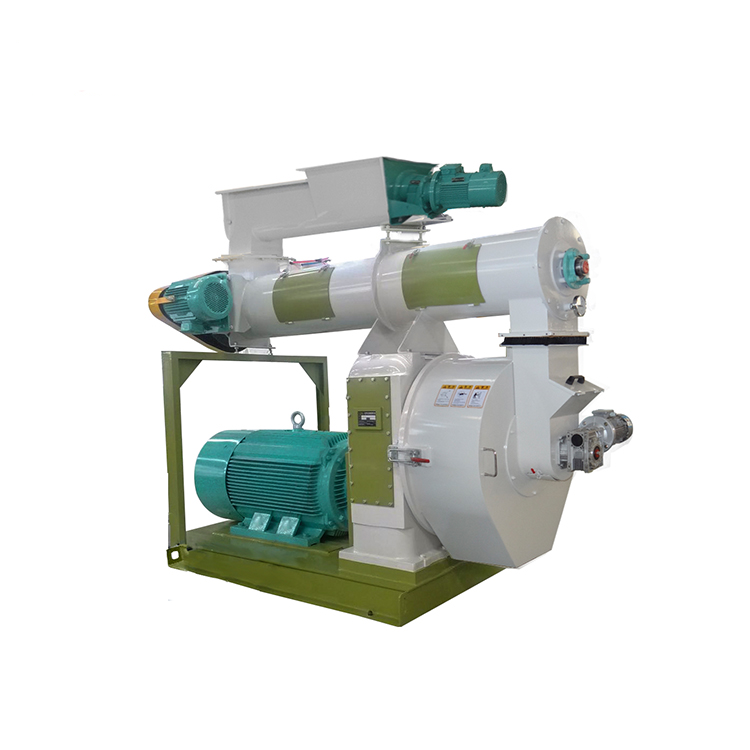
Three couplings in this chain deserve special attention when you plan the layout. Grinding feeds pelleting: particle size that is too coarse leaves fibers unbroken in the die, while over-grinding wastes electricity and can soften pellets. Conditioning feeds cooling: pellets leave the die hot and moist, and if the cooler is undersized, moisture migrates back into the bag and crumbles the pellet in storage. And sieving feeds the customer: the fines you screen out and recycle are the ones that would otherwise end up in feeder pans, where research shows they cost you feed conversion — more on that below.
Quality: What the Customer Actually Buys
A poultry farmer judges your feed in the pan, not on the spec sheet. Pellet quality is usually expressed as pellet durability — the ability of pellets to survive handling without breaking into fines — and it is measured with a standardized tumbling test defined in ASAE Standard S269.5, as described in Kansas State University’s fact sheet on pellet durability and fines. The same fact sheet summarizes the reason durability pays: studies in poultry showed feed conversion worsened as the share of fines in the feed pan rose, and pellets as a form improve growth and feed-to-gain ratios in both swine and poultry.
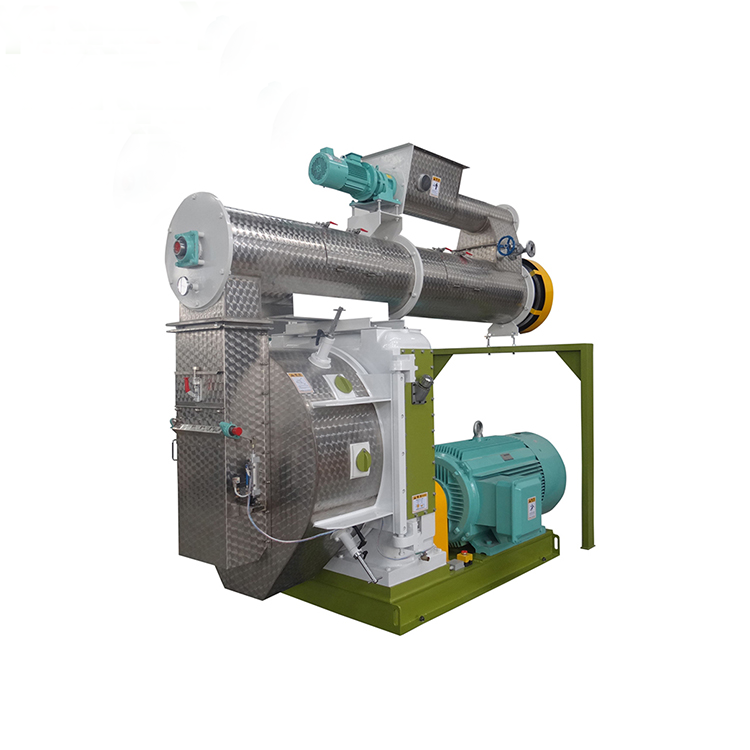
For a new mill, durability is set by four levers you control at purchase and commissioning time: the grind size leaving the hammer mill, the steam conditioning regime ahead of the die, the die compression ratio matched to your formula, and the cooler’s ability to remove heat and moisture evenly. None of these can be fixed later by running the mill slower. If your market expects durable broiler pellets, put real steam capacity in the design from day one — the mechanics are explained in our article on steam conditioning in feed pelleting, and the die-side geometry in the guide to die compression ratio.
Budget: Where the Money Goes
Investors tend to compare mill quotations on equipment price alone and then discover the other half of the project. A complete budget for a poultry feed mill has six blocks, and the last two are the ones that stop half-built projects:
| Budget block | What it covers | Planning notes |
|---|---|---|
| Process equipment | Grinding, dosing, mixing, conditioning, pelleting, cooling, sieving, bagging, conveying | Compare quotes on identical scope and rated duty, not nameplate labels |
| Civil works | Foundations, steel structure, silo bases, pit construction, machine house | Foundation drawings must match the supplier’s load data before concrete is poured |
| Utilities | Transformer and distribution, steam boiler, compressed air, water treatment | The boiler is a separate project with its own permits in many countries |
| Installation and commissioning | Mechanical/electrical installation, alignment, single-machine tests, load trials | Budget travel, local labor and crane time explicitly; see the cost breakdown article |
| Spares and tools | Dies, rollers, screens, belts, seals, welding and alignment tools | Order the start-up spares list with the line, not after the first breakdown |
| Working capital | Raw material stock, bags, payroll until receivables cycle | Grain purchases are seasonal; underfunding here shows up as idle capacity |
We break down the division between equipment and the “everything else” layer in detail in our 10 t/h feed mill investment cost breakdown; the proportions differ from project to project, but the discipline of quoting all six blocks on one page is what lets you compare two suppliers fairly.
Licensing, Feed Safety and Buyer Trust
Feed milling is a regulated activity nearly everywhere. The precise list varies by country — company registration, factory siting approval, environmental clearance for the boiler and dust emissions, feed business licensing from the agriculture authority, and in some markets product registration for each formula — but the technical core is the same everywhere: you must be able to show that what leaves your gate matches what the label claims, and that hazards along the way were controlled.
The international reference is the FAO’s good practices manual for the feed industry, developed with IFIF, which organizes feed safety around a HACCP-style approach: identify hazards (mycotoxins, Salmonella, carry-over of medicated feed, physical contaminants), set critical control points at intake, grinding, mixing and dispatch, and keep records that let you trace any bag back to its raw material lots. Building those habits costs little at design time — a dedicated intake log, one magnet per relevant transfer point, batch records from the mixer controller — and is nearly impossible to retrofit after inspectors or buyers ask for them.
For buyers, your quality claims travel through documentation. Farms that feed a branded bag are buying consistency: same formula, same durability, same bag weight. If you plan to sell to integrators or to export feed later, standards such as GMP+ FSA or ISO 22000 become commercial requirements rather than paperwork. Ask your target customers what certificates their procurement team expects before you design your lab and QC routine around the wrong one. FAO’s poultry production resources are a useful neutral starting point for the husbandry side of the market you will be selling into.
Raw Materials: The Input Side Decides the Output
Every quality problem in a finished bag can be traced back through the process, and a surprising share of them stop at the intake pit. A feed mill is a converter, not a creator: it takes whatever moisture, mold load and variability arrives with the grain and either corrects it or passes it on to the farmer. The input plan therefore deserves the same rigor as the equipment list.
Map your raw material supply by season before you fix the formula. Maize harvests come in one or two windows in most markets; soybean meal may travel from a distant crusher or an import terminal, which ties your cost to shipping schedules and currency. Price both the crop-year average and the lean-season peak into your business plan, because your selling price will be set by the lean season whether you like it or not. A mill that budgets raw material at harvest prices will spend the expensive months selling feed below cost or diluting quality — the classic way a technically sound project earns a bad reputation.
At intake, three checks cost minutes and save tons. Moisture at the pit, with a calibrated meter, protects your silos from mold and hot spots during storage. A visual and smell inspection, backed by a quick test weight, catches wet or heated grain before it enters the bin. And a mycotoxin testing routine — even a simple lateral-flow kit on incoming lots — lets you reject or blend high-risk grain deliberately instead of discovering the problem in bird performance two weeks later. The FAO feed industry manual referenced earlier dedicates its intake chapter to exactly these controls, because contamination intercepted at the pit is one-tenth the cost of a recall at the bag.
Storage is part of the same decision. Silos fitted with aeration keep grain temperature uniform and delay insect and mold development without chemicals, which matters when grain sits through a hot season between harvest windows. Size silo capacity for at least the longest gap between reliable deliveries, and give the intake line the same daily throughput as the pellet line — a mill that pelletes 5 t/h but can only receive 2 t/h of trucks per hour will spend its evenings idling.
Staffing, Pricing and the Sales Model
Three roles carry a small feed mill, and hiring them before start-up is cheaper than hiring them after the first complaint. The mill manager owns the formula, the quality checklist and the schedule; a good one can read a pellet’s exit temperature by ear and knows when a die needs changing. The maintenance electrician keeps the line running — mixers and pellet mills punish neglect quickly — and doubles as the person who actually logs the readings. The driver or dispatch clerk is your customer interface, and in practice your brand: bags that arrive counted, sealed and on time sell the next load without a sales call.
Train around checklists, not around heroes. A start-up mill should have written daily checks (cooler discharge temperature, fines percentage, scale calibration) and weekly ones (mixer CV test, magnet cleaning, screen inspection), with results recorded. When a second shift is added later, the checklist is what lets the night crew hold the same standard, and it is also the record an inspector or a disputing customer will ask for first.
Pricing follows from cost honesty. Build your cost per ton from four live inputs — raw material at the current season’s price, electricity, labor, and consumables such as dies, rollers and bags — and re-run the calculation monthly, because grain moves and your competitors’ quotes move with it. Sell on the mix: bagged sales to smallholders give volume but thin margins, while contracted supply to an integrator or a large layer farm trades some price for guaranteed offtake. Most successful start-ups run both, using contracts to cover the loan payment and spot bag sales to capture upside when a competitor has a bad season. Whatever the blend, put your quality specification — durability target, fines limit, bag weight tolerance — on the price list itself; a written spec converts quality from a promise into a product.
Build and Ramp Up in Phases
A workable project sequence looks like this: civil works first (foundations and steel structure, with anchor bolts set from the supplier’s drawings); utilities in parallel (power connection and boiler are the two longest lead items almost everywhere); then mechanical installation, electrical and control wiring, single-machine trial runs, and finally load trials with a low-risk formula before the first commercial batch. From site readiness to first saleable ton, a 3–10 t/h line typically needs a matter of weeks of mechanical work once civil works are done — the schedule risk concentrates in the utilities and approvals, not in bolting machines together.
Plan the ramp-up the same way. Run the first weeks on a forgiving broiler grower formula before attempting high-fat or high-molasses products. Keep a fixed quality checklist — pellet temperature out of the cooler, durability on every shift, CV check on the mixer monthly, fines percentage per batch — and put the results on the wall. Buyers forgive a young mill that communicates; they do not forgive one that ships hot, crumbly pellets twice.
Five Mistakes That Sink New Feed Mills
From the project files, these are the recurring failure patterns in the first year:
- Buying nameplate capacity instead of process capacity. A pellet mill’s rating assumes a specific formula, grind and conditioning regime. Test against your own formula, or buy a size up from the nameplate that matches your target t/h.
- Underestimating the boiler. Pellet quality without adequate steam is a compromise. If the boiler arrives late or undersized, the mill spends its first season selling the one thing it can’t deliver — durable pellets.
- Skipping the spares order. Dies, rollers and screens are consumables with lead times measured in weeks. A die that arrives a month after it cracks costs more than the whole start-up spares package.
- No dust management plan. Grain dust is combustible and unpleasant to work in. The pulse filter is not an accessory; it protects uptime, health and fire safety, and regulators notice it early.
- Financing only the equipment. The mill that stocks grain badly, or runs out of bags and payroll in month three, fails for financial rather than technical reasons. Working capital belongs in the project budget, not in an afterthought.
Bottom Line
A poultry feed mill business is a manufacturing business attached to a logistics business: the mill turns grain into a durable, uniform product, and the trucks turn that product into customer trust. Size the market from fieldwork, derive capacity from daily demand and honest utilization, put steam, cooling and dust control in the design from the start, and budget the six blocks — equipment, civil, utilities, installation, spares and working capital — on one page. Get those decisions right and the equipment itself is the least risky part of the project. When you are ready to price a specific line, send us your target tonnage, product mix and raw material list, and we will size the line against your formula rather than a brochure.